
Taw qhia
This manual provides essential information for the safe and effective installation, operation, and maintenance of the Idec RH2B-UL-AC110-120V Electromechanical Relay. Please read this manual thoroughly before using the product to ensure proper function and to prevent potential hazards.
Cov ntaub ntawv kev nyab xeeb
WARNING: Electrical shock hazard. Installation and maintenance should only be performed by qualified personnel. Disconnect all power before working with the relay.
- Always ensure power is disconnected before installation, wiring, or maintenance.
- Xyuas kom tseeb voltage and current ratings before connecting the relay to a circuit.
- Tsis txhob siv lub relay hauv qhov chaw uas tsis pub tshaj qhov kub thiab txias lossis av noo uas tau teev tseg.
- Ensure proper grounding where applicable.
Khoom Tshajview
The Idec RH2B-UL-AC110-120V is a general-purpose electromechanical relay designed for various industrial control applications. It features a compact design and is suitable for DIN rail mounting.
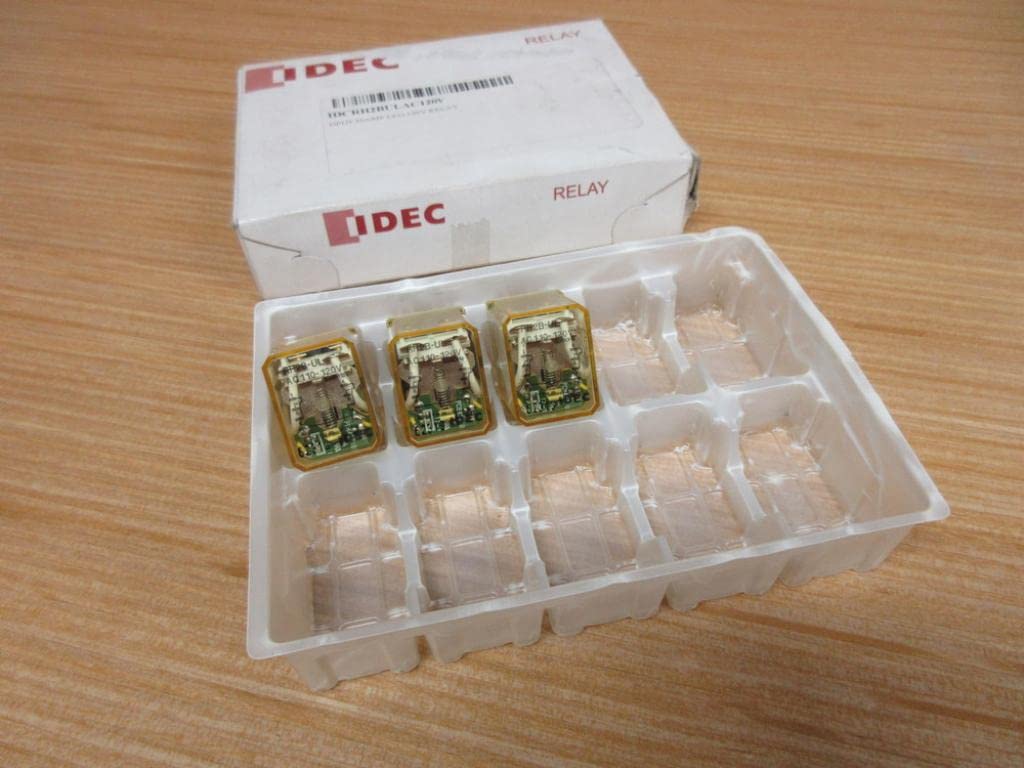
Figure 1: Idec RH2B-UL-AC110-120V Relays in their original packaging, showing a pack of four units.
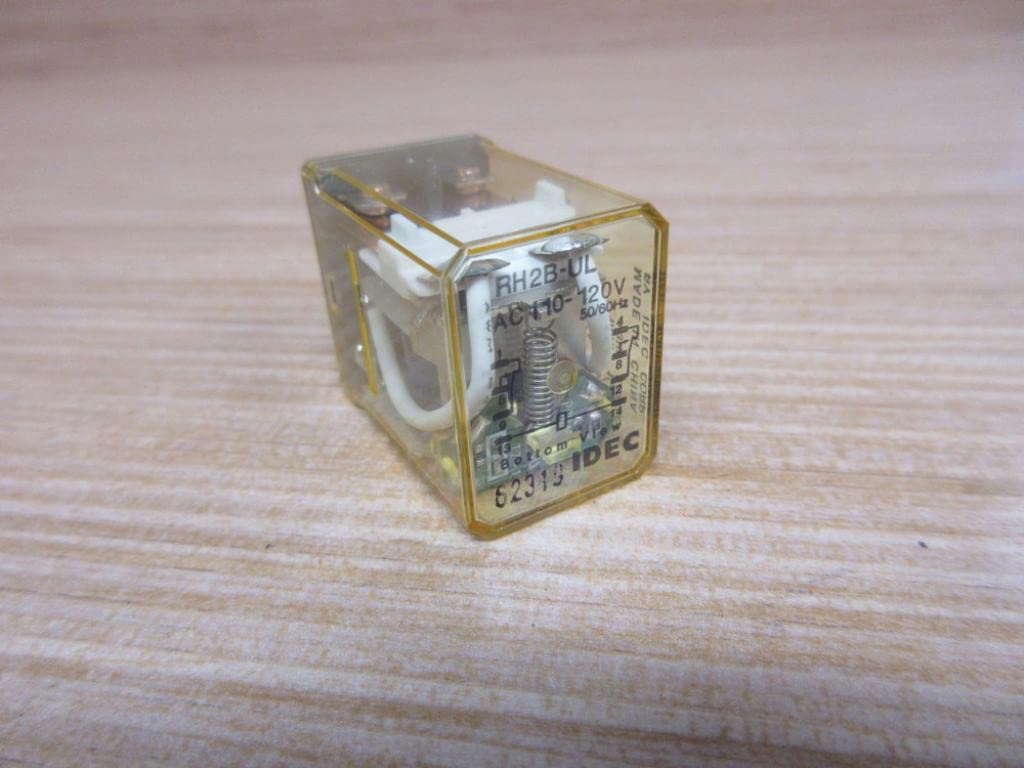
Figure 2: A single Idec RH2B-UL-AC110-120V relay, providing an angled view of the transparent casing thiab cov khoom sab hauv.
Kev teeb tsa thiab kev teeb tsa
Follow these steps for proper installation of the Idec RH2B-UL-AC110-120V Relay:
- Fais fab tuag: Ensure all power to the circuit is completely disconnected before beginning installation.
- Mounting: The relay is designed for DIN Rail mounting. Securely attach the relay to a standard DIN rail in your control panel.
- Kev xaim: The relay utilizes through-hole connectors. Carefully connect the control circuit wiring to the coil terminals and the load circuit wiring to the contact terminals. Refer to the wiring diagram (if available in your system documentation) for specific terminal assignments.

Daim duab 3: Hauv qab view of the relay, showing the through-hole connector pins for wiring connections.
- Voltage Kev Tshawb Fawb: Paub meej tias cov khoom voltage for the coil matches the relay's specified voltage ntawm 110-120V AC, 50/60Hz.
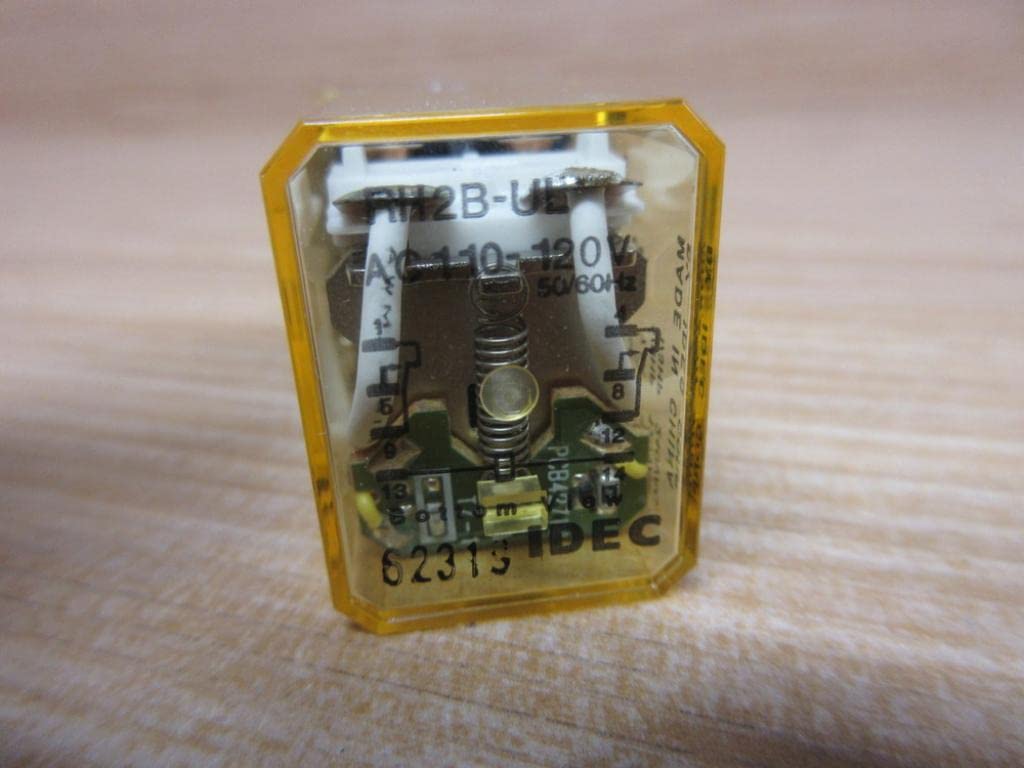
Daim duab 4: Close-up view of the relay's transparent casing, highlighting the model number and voltage specifications (AC110-120V, 50/60Hz).
- Load Verification: Ensure the connected load does not exceed the relay's contact ratings (e.g., 10A resistive at 240VAC).
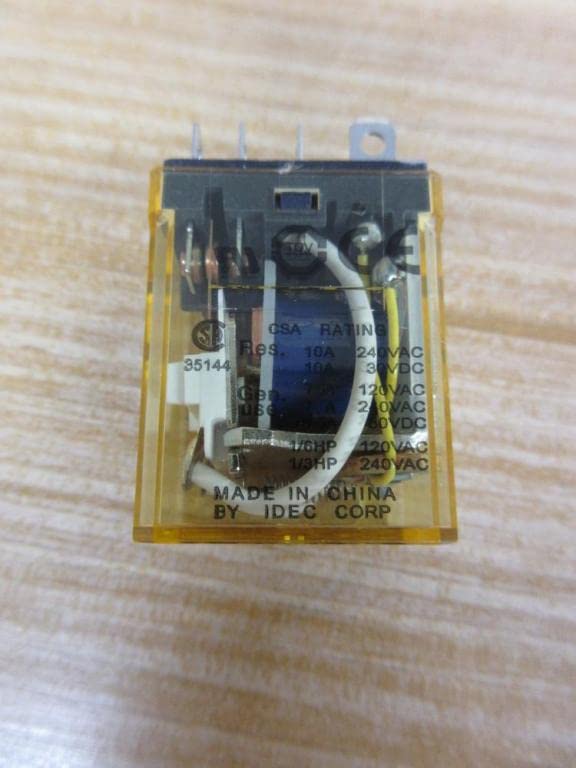
Daim duab 5: Sab view of the relay, displaying detailed electrical ratings and certifications.
- Kev kuaj zaum kawg: Before restoring power, double-check all connections for security and correctness.
Cov lus qhia ua haujlwm
The Idec RH2B-UL-AC110-120V Relay operates automatically based on the control signal applied to its coil. When the specified AC voltage (110-120V) is applied to the coil, the relay contacts will switch, opening or closing the connected load circuit. When the voltage is removed, the contacts return to their original state.
- Ensure the control signal is within the specified voltage ntau yam rau kev ua haujlwm txhim khu kev qha.
- Observe any indicator lights on the relay (if present) to confirm coil energization.
Kev tu
The Idec RH2B-UL-AC110-120V Relay is designed for long-term, reliable operation with minimal maintenance. However, periodic inspection is recommended:
- Kev tshuaj xyuas qhov muag: Periodically check the relay for any signs of physical damage, discoloration, or loose connections.
- Ntxuav: Yog tias tsim nyog, maj mam ntxuav sab nraud ntawm lub relay nrog daim ntaub qhuav thiab mos. Tsis txhob siv cov tshuaj yaj lossis cov tshuaj ntxuav uas ua rau tawv.
- Kev Tshuaj Xyuas Kev Sib Txuas Lus: In critical applications, inspect contacts for pitting or wear. Replace the relay if significant wear is observed.
- Ib puag ncig tej yam kev mob: Xyuas kom lub chaw khiav hauj lwm nyob twj ywm tsis pub dhau qhov ntsuas kub thiab cov av noo kom tiv thaiv kev ua tsis tiav ntxov.
Kev daws teeb meem
If the relay is not functioning as expected, consider the following common issues:
| Teeb meem | Ua Tau | Kev daws |
|---|---|---|
| Relay coil does not energize. | Tsis muaj zog rau coil, lub vol tsis raugtage, faulty wiring, or damaged coil. | Check power supply, verify voltage (110-120V AC), inspect wiring connections, test coil continuity. |
| Contacts do not switch. | Coil not energizing, contacts welded, or mechanical failure. | Refer to "Relay coil does not energize" solutions. If coil is good, replace relay. |
| Load not receiving power. | Relay contacts not closing, open circuit in load wiring, or faulty load. | Verify relay operation. Check load circuit wiring and the load itself. |
If troubleshooting steps do not resolve the issue, contact Idec technical support or a qualified electrician.
Specifications
| Parameter | Tus nqi |
|---|---|
| Qauv nab npawb | RH2B-UL-AC110-120V |
| Hom | Idec |
| Coil Voltage | 110-120V AC |
| Ntau zaus | 50/60 Hz |
| Kev Ntsuas Tam Sim No (Resistive) | 10A @ 240VAC, 10A @ 30VDC |
| Current Rating (General Use) | 7.5A @ 120VAC, 7A @ 240VAC, 7.5A @ 30VDC |
| Horsepower Rating | 1/6 HP @ 120VAC, 1/3 HP @ 240VAC |
| Mounting Hom | DIN Rail Ncej |
| Hom Connector | Los ntawm Qhov |
| Hom kev ua haujlwm | Tsis siv neeg |
| Yam Nyhav | 0.01 hli |
| Chaw tsim tshuaj paus | Idec |
Warranty thiab Support
For warranty information and technical support, please contact Idec directly through their official website or customer service channels. Keep your purchase receipt for warranty claims.
Idec Official Webqhov chaw: us.idec.com