
1. Taw qhia
Thank you for choosing the Puig R19 Engine Protectors. These crash pads are designed to provide comprehensive protection for your motorcycle's chassis and engine. They also offer additional knee protection due to the rubber elements that crown the piece. The design ensures they integrate seamlessly with your motorcycle's aesthetics, without exceeding handlebar width or interfering with footpegs.
This product is compatible with the following motorcycle models:
- BMW S1000R (2021)
- BMW S1000R (2022)
Please read this manual carefully before installation and use to ensure proper fitting and to maximize the product's protective capabilities.
2. Kev ceeb toom kev nyab xeeb
- Professional Installation pom zoo: If you are unsure about any step, it is recommended to have the product installed by a qualified motorcycle mechanic.
- Tshawb xyuas Compatibility: Always verify that the product is compatible with your specific motorcycle model and year before attempting installation.
- Ruaj ntseg txhua qhov fasteners: Ensure all bolts and fasteners are tightened to the manufacturer's specifications. Regularly check for tightness, especially after the first few rides.
- Rubber Element Security: The rubber elements on the crash pads are crucial for additional protection. It is essential to ensure these are securely attached. Consider using a suitable adhesive to prevent them from detaching during use, as they are only loosely fitted from the factory.
- Kev tshuaj xyuas tsis tu ncua: Periodically inspect the engine protectors for any signs of damage, wear, or loose components. Replace damaged parts immediately.
- Tsis Hloov: Do not modify the engine protectors or their mounting hardware. Modifications can compromise their structural integrity and protective function.
3. Kev teeb tsa
The Puig R19 Engine Protectors are designed for straightforward installation. A detailed instruction booklet is included with the product to guide you through the process. Please refer to this booklet for specific, step-by-step instructions tailored to your motorcycle model.
3.1 Cov Txheej Txheem Kev Txhim Kho Kev Txhim Kho
- Unpack Components: Carefully unpack all components and verify that all parts listed in the instruction booklet are present.
- Qhia Mounting Points: Locate the designated mounting points on your motorcycle's chassis as indicated in the specific instruction booklet.
- Attach Brackets (if applicable): If separate mounting brackets are provided, attach them first, ensuring they are correctly oriented.
- Mount Protectors: Secure the engine protectors to the brackets or directly to the chassis using the provided hardware. Ensure all bolts are finger-tight initially.
- Thaum kawg Tightening: Once both protectors are in place and aligned, progressively tighten all fasteners to the torque specifications provided in the instruction booklet. Do not overtighten.
- Secure Rubber Elements: The grey rubber elements are supplied loosely fitted. To prevent loss during riding, it is highly recommended to secure these elements permanently using a strong, flexible adhesive suitable for rubber and nylon. Apply adhesive to the inside of the rubber cap and press firmly onto the crash pad.
- Post-Installation Check: After installation, ensure there is no interference with any moving parts of the motorcycle (e.g., handlebars, suspension, cables) and that the protectors are firmly secured.
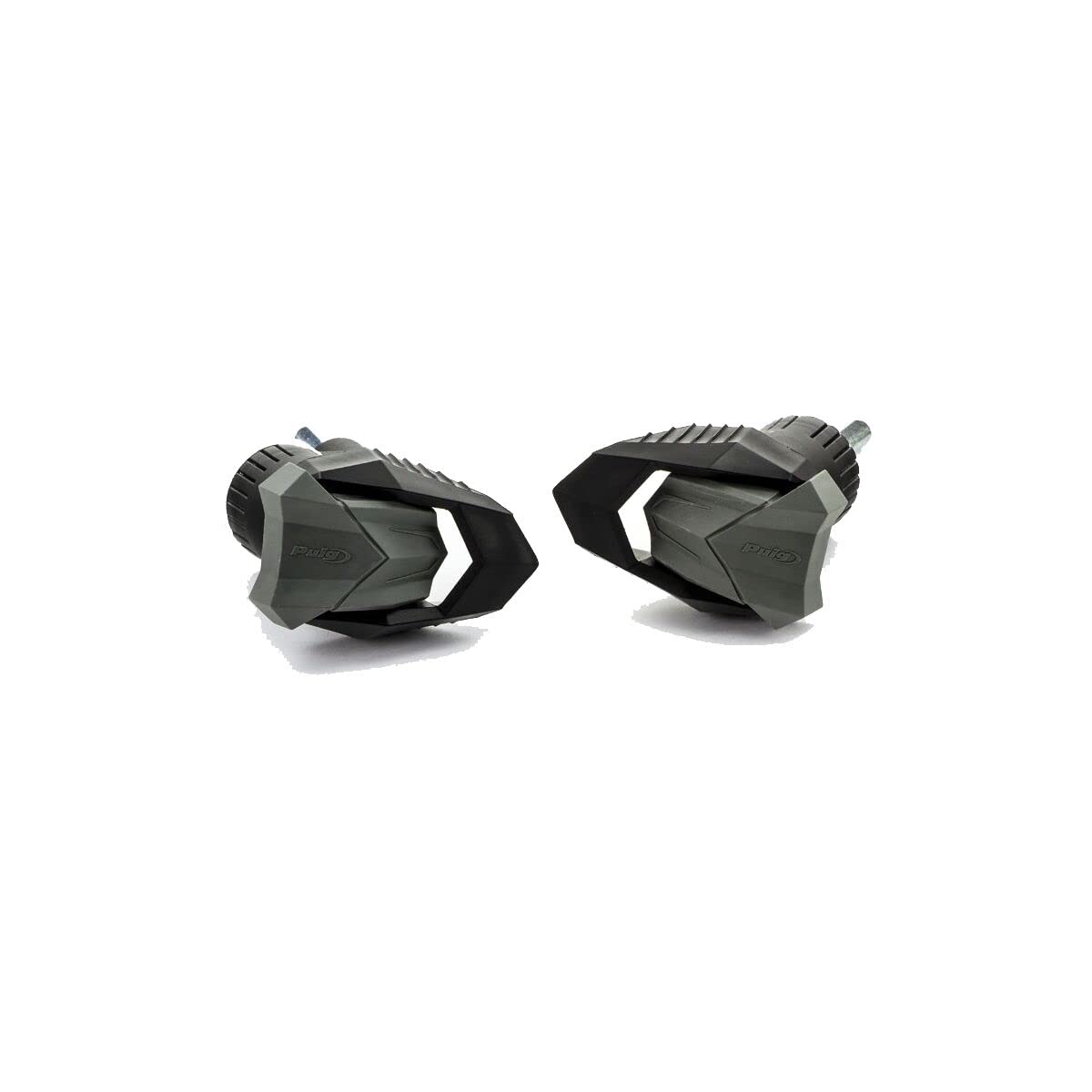
Image showing the Puig R19 Engine Protector in black. This protector is designed to safeguard the motorcycle's chassis and engine during a fall.
4. Kev ua haujlwm thiab kev ua haujlwm
The Puig R19 Engine Protectors are passive safety devices designed to absorb impact energy and reduce damage to your motorcycle's critical components during a fall or slide. They function by providing a sacrificial point of contact with the ground, preventing direct impact to the engine casing, frame, and other vulnerable parts.
- Chassis and Engine Protection: The primary function is to protect the motorcycle's frame and engine from abrasion and impact damage.
- Kev sib xyaw ua kom zoo nkauj: The protectors are designed to complement the motorcycle's lines and do not protrude excessively, maintaining the bike's original aesthetic.
- Additional Knee Protection: The rubber elements on the protectors can offer a degree of additional protection for the rider's knees in certain impact scenarios.
While these protectors significantly reduce potential damage, they cannot guarantee complete protection in all accident scenarios. Always ride safely and wear appropriate protective gear.
5. Kev tu
Regular maintenance ensures the longevity and effectiveness of your Puig R19 Engine Protectors.
- Ntxuav: Clean the protectors regularly with mild soap and water. Avoid harsh chemicals or abrasive cleaners that could damage the material or finish.
- Fastener Check: Periodically check all mounting bolts and fasteners for tightness. Vibrations from riding can sometimes loosen components.
- Rubber Element Inspection: Ensure the rubber elements remain securely attached. If they show signs of loosening, re-secure them with a suitable adhesive.
- Kev tshuaj xyuas puas: After any incident (even a minor tip-over), thoroughly inspect the engine protectors for cracks, deformation, or significant abrasion. If damage is present, the protector's ability to absorb future impacts may be compromised, and replacement is recommended.
- Corrosion Check: Inspect metal components for any signs of corrosion, especially if riding in wet or salty conditions.
6. Kev daws teeb meem
This section addresses common issues you might encounter with your engine protectors.
6.1 Loose or Detached Rubber Elements
- Qhov teeb meem: The grey rubber caps on the crash pads become loose or detach during riding.
- Kev daws: This is a known issue as they are only loosely fitted from the factory. Remove the rubber cap, clean both the inside of the cap and the crash pad surface. Apply a strong, flexible adhesive (e.g., silicone-based or rubber-specific adhesive) to the inside of the rubber cap and firmly press it back onto the crash pad. Allow sufficient curing time before riding.
6.2 Damaged Protector After an Incident
- Qhov teeb meem: The engine protector shows signs of cracks, deep scratches, or deformation after a fall or impact.
- Kev daws: A damaged protector may have compromised structural integrity and will not offer the same level of protection in future incidents. It is strongly recommended to replace the damaged protector immediately. Contact your retailer or Puig directly for replacement parts.
6.3 Loose Mounting Bolts
- Qhov teeb meem: Mounting bolts appear loose or the protector feels wobbly.
- Kev daws: Immediately stop riding. Inspect all mounting bolts. Tighten them to the torque specifications provided in the original installation booklet. If bolts continue to loosen, consider using a thread-locking compound (e.g., Loctite blue) on the threads, ensuring it is compatible with the bolt material and motorcycle components.
7. Cov lus qhia tshwj xeeb
| Qauv nab npawb: | 20861 XNUMXn |
| Hom Tshuaj: | puv |
| Khoom siv: | Nylon, Rubber |
| Xim: | Dub |
| Qhov Loj (L x W x H): | 30.48 x 17.78 x 10.16 cm (12 x 7 x 4 nti) |
| Qhov hnyav: | 1.09 kg (2.4 lbs) |
| Compatible Vehicle Type: | Sport Motorcycles |
| Part Position: | Frontal |
8. Warranty thiab Support
For information regarding product warranty, please refer to the documentation provided with your purchase or visit the official Puig webqhov chaw. Warranty cov nqe lus thiab tej yam kev mob yuav txawv raws cheeb tsam thiab cov khw muag khoom.
If you require technical assistance, have questions about installation, or need to order replacement parts, please contact your authorized Puig dealer or the retailer from whom you purchased the product. You may also find support resources on the official Puig webqhov chaw: