
1. Taw qhia
The UNI-T UT60S is a smart, true RMS digital multimeter designed for accurate and reliable electrical measurements. Featuring 9999 counts, this device can measure AC/DC voltage, AC/DC current, resistance, diode, capacitance, temperature, and frequency. Its fully automatic anti-burn intelligent design helps prevent operational errors and device damage, making it suitable for both professional technicians and everyday users.

Daim duab 1: Pem hauv ntej view of the UNI-T UT60S Digital Multimeter.
2. Cov ntaub ntawv kev nyab xeeb
Always adhere to safety precautions when using the multimeter. Failure to do so may result in electric shock, injury, or damage to the meter or equipment under test.
- Nyeem phau ntawv qhia: Before use, thoroughly read and understand all instructions and safety warnings in this manual.
- Nyob Voltage: Tsis txhob siv ntau tshaj qhov ntsuas voltage, as marked on the meter, between terminals or between any terminal and earth ground. The UT60S is capable of withstanding a maximum overvoltage impulse of 1000V.
- Tshawb xyuas ua ntej siv: Before each use, inspect the meter, test leads, and accessories for any damage. Do not use if damaged.
- Proper Terminals: Ensure test leads are connected to the correct input terminals for the measurement function selected.
- Circuit De-energization: Always de-energize the circuit and discharge all high-voltage capacitors before performing resistance, continuity, diode, or capacitance measurements.
- Live Circuit Work: When working on live circuits, work alone as little as possible, and ensure another person is present to provide assistance if needed.
- Kev tiv thaiv overcurrent: The meter features overcurrent alarms and protection functions. Do not exceed the maximum current ratings for the input terminals.
- Ib puag ncig tej yam kev mob: Use the meter only as specified in this manual. Do not use the meter in explosive gas, vapor, or dusty environments.
- Cov cuab yeej tiv thaiv tus kheej: Always wear appropriate personal protective equipment (PPE), such as safety glasses and insulated gloves, when working with electrical circuits.
3. Khoom Nta
The UNI-T UT60S Digital Multimeter offers a range of features for versatile and safe electrical testing:
- 9999 suav zaub: Provides high-resolution measurements for precision.
- True RMS Kev Ntsuas: Ua kom muaj kev nyeem ntawv tseeb rau cov tsis-sinusoidal waveforms.
- Fully Automatic Anti-Burn Design: Intelligent protection against operational errors and potential device damage.
- Kev ntsuas dav dav: Kev ntsuas AC / DC voltage (up to 1000V), AC/DC current, resistance, diode, capacitance, temperature, and frequency.
- Large LCD Screen with Dual Display: Allows simultaneous display of AC voltage and frequency, enhancing readability.
- Full Button Design: Offers intuitive control and automatic recognition of current input jacks.
- Fast ADC (Analog to Digital Converter): Provides rapid measurement updates (3 times/second).
- Misoperation Protection: Capable of withstanding a maximum overvoltage impulse of 1000V, with overvoltage and overcurrent alarms.
- NCV (Non-Contact Voltage) Kev Ua Haujlwm: Ntes AC voltage without physical contact, featuring audible and visual alarms for safety.
- Tsis siv neeg lub zog txuag: Low power consumption (7mA during operation, 5uA in sleep state) and automatic backlight display in dark environments, extending battery life. Automatic shut-down feature.

Figure 2: The UT60S display with 9999 counts for precise readings.
4. Dab tsi hauv lub thawv
Thaum qhib lub pob, koj yuav tsum pom cov khoom hauv qab no:
- UNI-T UT60S Digital Multimeter
- Thermocouple (for temperature measurements)
- Multimeter Test Leads (red and black)
- 1.5V AAA Batteries (pre-installed or included separately)

Figure 3: Contents of the UNI-T UT60S package, including the multimeter, test leads, and thermocouple.
5. Teeb tsa
5.1. Kev teeb tsa roj teeb
The UT60S typically uses 1.5V AAA batteries. To install or replace batteries:
- Xyuas kom tseeb tias lub multimeter raug tua thiab cov xov hlau kuaj raug txiav.
- Nrhiav lub thawv roj teeb nyob tom qab ntawm lub 'meter'.
- Siv lub hau ntswj qhib lub roj teeb lub hau npog.
- Insert the AAA batteries, observing correct polarity (+ and -).
- Hloov lub roj teeb lub hau npog thiab tuav nws nrog cov ntsia hlau.
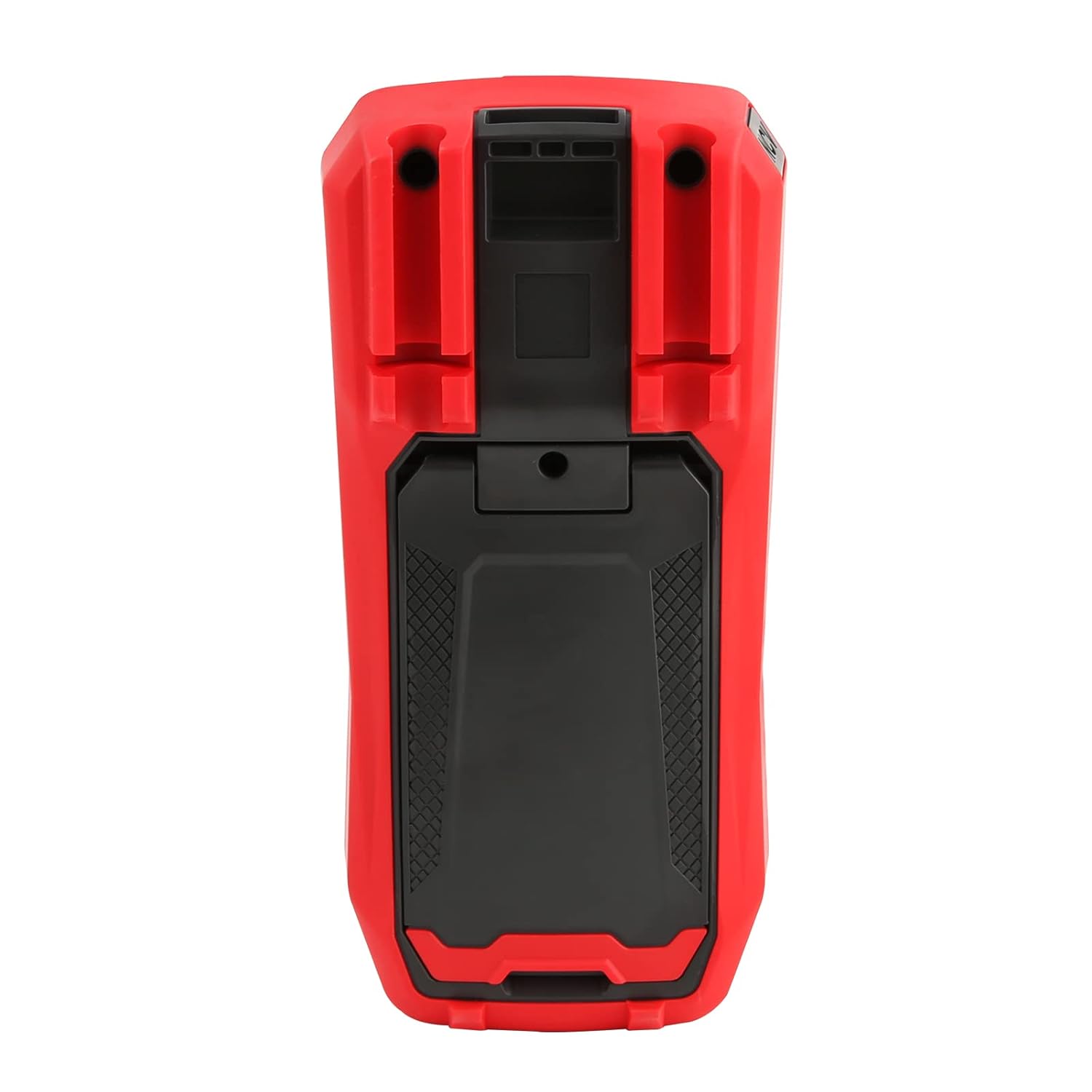
Daim duab 4: Hauv qab view of the UT60S, indicating the battery compartment location.
5.2. Kev Sib Txuas Cov Thawj Coj
Connect the test leads to the appropriate input terminals:
- The black test lead (common) should always be connected to the COM lub davhlau ya nyob twg.
- Rau voltage, resistance, capacitance, frequency, diode, and continuity measurements, connect the red test lead to the VΩHzCAP lub davhlau ya nyob twg.
- For current measurements (mA/A), connect the red test lead to the mA/A lub davhlau ya nyob twg.
- For microampere current measurements (μA), connect the red test lead to the - UA lub davhlau ya nyob twg.

Figure 5: Input terminals of the UT60S for connecting test leads.
6. Cov lus qhia ua haujlwm
The UT60S features a full button design for selecting measurement functions. The meter's intelligent anti-burn design automatically recognizes the input jack and selected function.
6.1. Fais fab / Off
Nias lub Hwj chim button to turn the meter on or off. The meter will automatically shut down after a period of inactivity to save battery life.
6.2. Nws pib hom
In Auto mode, the meter automatically identifies the measurement type (voltage, resistance, continuity) and selects the appropriate range. This simplifies operation for general troubleshooting.
6.3. Ntsuas Qhov Voltage ntawm AC/DCtage
Kev ntsuas voltage:
- Txuas lub khab dub ua rau COM davhlau ya nyob twg thiab cov liab xeem ua rau lub VΩHzCAP lub davhlau ya nyob twg.
- Nias lub V ~ / Hz button to select AC voltage measurement, or the V= / NCV button for DC voltage. The meter may automatically select the correct mode in Auto range.
- Txuas cov kev ntsuam xyuas thoob plaws hauv lub voj voog lossis cov khoom siv los ntsuas.
- Nyeem voltage value on the display. For AC voltage, the frequency may also be displayed simultaneously.

Daim Duab 6: Ntsuas AC voltage and frequency with the UT60S.
6.4. Ntsuas AC/DC Tam Sim No
Kev ntsuas tam sim no:
- TSEEM CEEB: To measure current, the meter must be connected in series with the circuit. Always turn off power to the circuit before connecting the meter.
- Txuas lub khab dub ua rau COM lub davhlau ya nyob twg.
- For current up to 10A, connect the red test lead to the mA/A terminal. For microampere current, connect to the - UA lub davhlau ya nyob twg.
- Nias lub ACA/DCA button to select AC or DC current measurement.
- Break the circuit and connect the test leads in series with the load.
- Siv fais fab rau lub voj voog thiab nyeem tus nqi tam sim no ntawm qhov screen.
6.5. Measuring Resistance, Diode, and Continuity
To measure resistance, diode, or continuity:
- Ensure the circuit is de-energized and capacitors are discharged.
- Txuas lub khab dub ua rau COM davhlau ya nyob twg thiab cov liab xeem ua rau lub VΩHzCAP lub davhlau ya nyob twg.
- Nias lub Ω→+ button to cycle through resistance, diode, and continuity functions.
- Txuas cov probes kuaj hla lub Cheebtsam.
- Read the measurement. For continuity, an audible buzzer will sound if continuity is detected.
6.6. Kev Ntsuas Peev Xwm
Kev ntsuas capacitance:
- Xyuas kom tseeb tias lub capacitor raug tso tawm tag nrho ua ntej kuaj.
- Txuas lub khab dub ua rau COM davhlau ya nyob twg thiab cov liab xeem ua rau lub VΩHzCAP lub davhlau ya nyob twg.
- Nias lub mV~°C°F button to select temperature measurement.
- Txuas cov probes kuaj hla cov capacitor terminals.
- Nyeem cov peev txheej ntawm cov zaub.

Figure 7: The UT60S performing a capacitance measurement.
6.7 ib. Kev ntsuas kub
Kev ntsuas kub:
- Connect the thermocouple to the appropriate input terminals (usually the VΩHzCAP thiab COM terminals, or dedicated temperature inputs if available).
- Nias lub mV~°C°F button to select temperature measurement.
- Place the thermocouple probe at the point where temperature needs to be measured.
- Read the temperature value on the display in Celsius or Fahrenheit.
6.8. NCV (Non-Contact Voltage) Kev Ua Haujlwm
The NCV function allows detection of AC voltage tsis muaj kev sib cuag ncaj qha nrog conductors.
- Nias lub V= / NCV button to activate the NCV function.
- Move the top of the meter close to the conductor or outlet.
- The meter will provide an audible alarm and visual indication (flashing light) if AC voltage is detected. The intensity of the alarm and light may vary with voltage zog.

Figure 8: Using the NCV function to detect live AC voltage.
6.9. Cov ntaub ntawv tuav
Nias lub THOV nias lub khawm kom khov qhov nyeem tam sim no ntawm qhov screen. Nias nws dua kom tso qhov kev ua haujlwm tuav.
6.10. Kev xaiv ntau yam
While the meter typically operates in Auto range, you can manually select a range by pressing the RANGE button. This can be useful for specific applications or to speed up measurements in stable conditions. Press and hold the RANGE button to return to Auto range.
6.11. USB Communication (if applicable)
The UT60S series may support USB communication for data logging and analysis on a computer. If your model includes this feature, connect the meter to your computer using the provided USB cable and install the UNI-T software. Refer to the software manual for detailed instructions.
Video 1: Demonstration of features like NCV, LoZ, and USB communication on a UNI-T UT161 series multimeter. The UT60S shares similar functionalities.
7. Kev tu
7.1. Kev ntxuav
So lub 'meter' lub thawv nrog kev tshaj tawmamp ntaub thiab xab npum me me. Tsis txhob siv cov tshuaj abrasives lossis cov kuab tshuaj. Xyuas kom lub meter qhuav tag ua ntej siv.
7.2. Hloov roj teeb
Hloov cov roj teeb thaum lub cim qhia tias roj teeb tsawg tshwm sim ntawm qhov screen. Saib Ntu 5.1 rau cov lus qhia txog kev teeb tsa roj teeb.
7.3. Hloov Fuse
If the current measurement function stops working, the fuse may need replacement. Refer to the full user manual for specific fuse ratings and replacement procedures. Always use fuses with the specified voltage thiab kev ntsuas tam sim no.
8. Kev daws teeb meem
If you encounter issues with your UNI-T UT60S, try the following basic troubleshooting steps:
- Tsis Muaj Zaub/Hwj Chim Qhib: Xyuas cov roj teeb installation thiab xyuas kom meej tias cov roj teeb tsis tas siv. Hloov yog tias tsim nyog.
- Kev nyeem tsis raug: Verify that the test leads are correctly connected to the appropriate terminals for the selected function. Ensure the function dial is set correctly. Check for damaged test leads.
- Kev Ntsuas Tam Sim No Tsis Ua Haujlwm: Check the fuse. If blown, replace it with a fuse of the correct rating. Ensure the meter is connected in series with the circuit.
- "OL" or Overload Indication: This indicates that the measured value is outside the selected range or the maximum capability of the meter. Try selecting a higher range (if in manual range mode) or ensure the component is within the meter's specifications.
- NCV tsis pom: Ensure the NCV function is activated and the meter is brought close enough to the AC voltage qhov chaw.
For more complex issues, refer to the detailed troubleshooting section in the complete user manual or contact UNI-T customer support.
9. Cov lus qhia tshwj xeeb
Key specifications for the UNI-T UT60S Digital Multimeter:
| Feature | Specification |
|---|---|
| Cov lej Xam Pom | 9999 |
| RMS tiag | Yog lawm |
| AC/DC Voltage | Txog li 1000V |
| AC / DC Tam Sim No | Up to 10A (mA/A terminals), Up to 1000μA (μA terminal) |
| Kev tiv thaiv | 0.1Ω - 40MΩ |
| Capacitance | 1nF - 4000μF |
| Kub | Yes (with thermocouple) |
| Ntau zaus | Yog lawm |
| Diode Xeem | Yog lawm |
| Kev xeem txuas ntxiv | Yog lawm |
| NCV (Non-Contact Voltage) | Yog lawm |
| Hwj chim Source | Battery Powered (1.5V AAA batteries) |
| Yam Nyhav | 370 Nws |
| Ua raws li kev nyab xeeb | UL 61010-1, IEC 61010-2-030, CAT III 1000V, CAT II 600V |
10. Warranty thiab Support
UNI-T provides customer support for their products. If you encounter any problems during use, please contact UNI-T customer service directly via email. They offer 7/24 1-to-1 user support to address your concerns promptly.
For specific warranty details, please refer to the warranty card included with your product or visit the official UNI-T webqhov chaw.