
Xprinter XP-Q801K
Xprinter XP-Q801K Thermal Receipt Printer User Manual
Model: XP-Q801K
1. Taw qhia
This manual provides comprehensive instructions for the setup, operation, and maintenance of your Xprinter XP-Q801K Thermal Receipt Printer. This printer is designed for efficient and reliable receipt printing in various business environments, featuring high-speed direct thermal printing and a USB interface for easy connectivity.

Daim duab 1: Pem hauv ntej view of the Xprinter XP-Q801K Thermal Receipt Printer, showing the paper output slot and control buttons.
2. Teeb tsa
2.1 Unpacking
Carefully remove the printer and all accessories from the packaging. Verify that all components are present:
- Xprinter XP-Q801K Thermal Receipt Printer
- Fais fab Adapter
- USB Cable
- Paper Roll (starter)
- Tus Neeg Siv Los Siv (cov ntawv no)
2.2 Txuas lub tshuab luam ntawv
Before connecting, ensure the printer is powered off. Locate the ports on the rear of the printer.
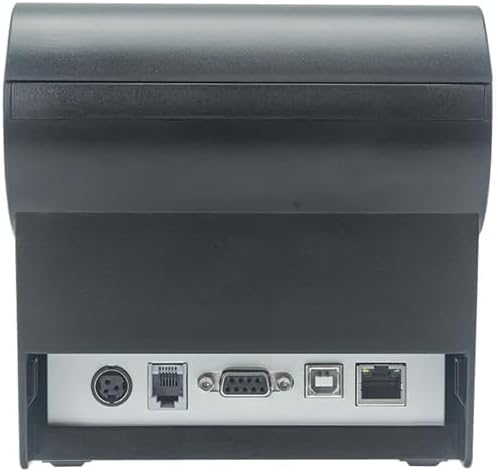
Daim duab 2: Hauv qab view of the printer, highlighting the power, USB, and other interface ports.
- Txuas lub zog: Insert the power adapter cable into the printer's power input port (DC 24V/2.5A) and plug the adapter into a suitable electrical outlet (AC 100-240V, 50-60Hz).
- Txuas USB: Connect one end of the provided USB cable to the USB port on the printer and the other end to an available USB port on your computer.
- Cash Drawer (Optional): If using a cash drawer, connect its cable to the cash drawer port (DC 24V/1A) on the printer.
2.3 Loading the Paper Roll
The printer uses 80mm wide thermal paper rolls.
- Qhib daim ntawv npog los ntawm kev nias lub khawm qhib lub hau (feem ntau nyob rau sab lossis pem hauv ntej).
- Insert the thermal paper roll with the printing surface facing the print head. Ensure the roll is seated correctly in the paper compartment.
- Rub ib daim ntawv me me dhau ntawm lub tshuab txiav.
- Kaw lub hau ntawv kom ruaj kom txog thaum nws nyem rau hauv qhov chaw.
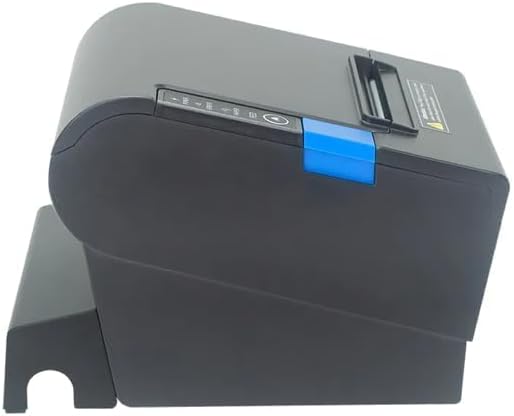
Daim duab 3: Sab view of the printer, illustrating the paper cover mechanism.
2.4 Kev teeb tsa tsav tsheb
The printer requires a driver to communicate with your computer. Drivers are typically available for Windows, Linux, Android, and Mac operating systems.
- For Windows users, the printer often supports plug-and-play installation or requires a specific Windows driver.
- For Linux, Android, and Mac, SDKs (Software Development Kits) are usually provided for integration.
Saib cov chaw tsim khoom lub vev xaib website or the included driver CD/USB drive for the latest drivers and installation instructions specific to your operating system.
3. Ua haujlwm ntawm lub tshuab luam ntawv
3.1 Hwj chim Rau/Tawm
Locate the power switch on the side or rear of the printer. Flip the switch to the 'ON' position to power on the printer. The 'POWER' indicator light will illuminate. Flip to 'OFF' to power down.
3.2 Indicator Lights and Buttons
The front panel typically features several indicator lights and buttons:
- Hwj chim: Qhia tau tias lub tshuab luam ntawv qhib lawm.
- yuam kev: Illuminates or flashes to indicate an error condition (e.g., paper out, print head overheating, cutter error).
- Ntawv: Indicates that the paper roll is low or out.
- Pub khawm: Press to manually feed paper. Hold to perform a self-test print (if supported by model).
3.3 Basic Printing
Once the printer is connected and drivers are installed, you can print receipts from your POS software or application. Ensure the printer is selected as the default or active printer in your system settings.
The printer supports various print speeds up to 300 mm/s and automatic paper cutting after each print job.
4. Kev tu
Regular maintenance ensures optimal performance and extends the life of your printer.
4.1 Ntxuav Lub Tshuab Luam Ntawv
The print head should be cleaned regularly, especially if print quality degrades.
- Turn off the printer and disconnect the power cable.
- Qhib daim ntawv npog.
- Siv paj rwb swab maj mam dampened with isopropyl alcohol (ethanol) to gently wipe the thermal elements of the print head.
- Cia lub taub hau luam ntawv kom qhuav tag ua ntej kaw lub hau thiab rov txuas lub hwj chim.
4.2 Cleaning the Cutter
Paper dust can accumulate around the cutter blade, affecting its performance.
- Turn off the printer and disconnect the power cable.
- Carefully remove any visible paper dust or debris from around the cutter blade using a soft brush or compressed air.
- Do not use liquids on the cutter.
4.3 Kev Tu Kom Huv
So sab nraud ntawm lub tshuab luam ntawv nrog ib daim ntaub mos mos, damp daim ntaub. Tsis txhob siv cov tshuaj hnyav hnyav lossis cov tshuaj abrasive.
5. Kev daws teeb meem
Tshooj lus no hais txog cov teeb meem uas koj yuav ntsib nrog koj lub tshuab luam ntawv.
| Teeb meem | Ua Tau | Kev daws |
|---|---|---|
| Lub tshuab luam ntawv tsis muaj zog. | Txoj hlua fais fab tsis txuas; Qhov hluav taws xob tsis ua haujlwm; Lub hwj chim kaw lawm. | Ensure power cable is securely connected. Test power outlet. Turn power switch to 'ON'. |
| No printing. | Paper out; Paper loaded incorrectly; Driver not installed or incorrect; USB cable loose; Printer not selected. | Load new paper roll. Re-load paper correctly. Install/reinstall correct driver. Check USB connection. Select printer in software. |
| ERROR light is on/flashing. | Paper out; Paper jam; Print head overheating; Cutter error. | Load paper. Clear paper jam. Allow printer to cool down. Check cutter for obstructions. |
| Kev luam ntawv tsis zoo. | Dirty print head; Low quality paper; Old paper roll. | Clean the print head (see Section 4.1). Use high-quality thermal paper. Replace old paper rolls. |
Yog tias qhov teeb meem tshwm sim tom qab sim cov kev daws teeb meem no, thov hu rau cov neeg siv khoom txhawb nqa.
6. Cov lus qhia tshwj xeeb
| Feature | Paub meej |
|---|---|
| Kev luam ntawv | Direct Thermal |
| Daim ntawv dav | 80 XNUMXmm |
| Luam nrawm | 230mm / s, 260mm / s, 300 hli / s |
| Interface | USB |
| Kab sib nrug | 3.75 mm (adjustable by commands) |
| Character Size (ANK) | Font A: 1.5 × 3.0 mm (12 × 24 dots) Font B: 1.1 × 2.1 mm (9 × 17 dots) |
| Character Size (Chinese/Traditional Chinese) | 3.0 × 3.0 mm (24 × 24 dots) |
| Hom Barcode | UPC-A / UPC-E / JAN13 (EAN13) / JAN8 (EAN8) / CODE39 / ITF / CODABAR / CODE93 / CODE128 |
| 2D Barcode | QR Code / PDF417 |
| NV Flash Memory | 256 kb ua |
| Lub zog nkag | AC 100-240V, 50-60Hz |
| Tso zis zog | DC 24V / 2.5A |
| Cash Drawer Output | DC 24V / 1A |
| Qhov hnyav | 1.0, XNUMX kg |
| Qhov ntev (D × W × H) | 194.5 × 145 × 146.4 mm |
| Ua haujlwm kub | 0 ~ 45 ° C |
| Kev khiav dej num | 10 ~ 80% RH |
| Cutter Lub Neej | 1.5 lab txiav |
| Sau Lub Taub Hau Lub Neej | 150km ua |
| OS Compatibility | Windows, Linux, Android, Mac |
Ask a question about this manual
Ask about setup, troubleshooting, compatibility, parts, safety, or missing instructions. Manuals+ will review the question and use this page’s manual context to help answer it.