
1. Taw qhia
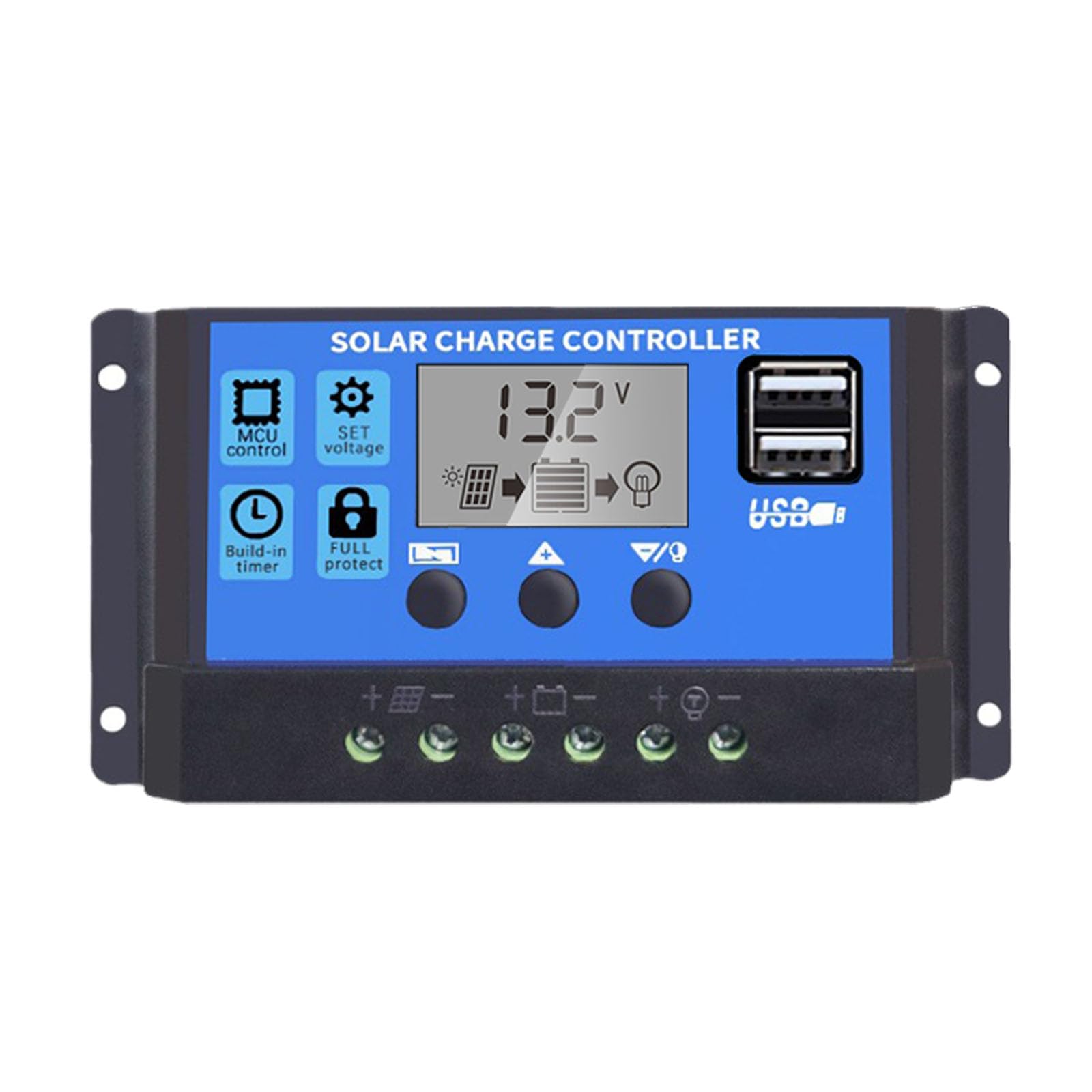
This manual provides essential instructions for the safe and efficient operation of your Saooer Solar Charge Controller. This device is designed to manage the power flow from your solar panel to your battery, ensuring optimal charging and protecting your battery from overcharge and over-discharge. It is compatible with both 12V and 24V solar systems and features a 30A discharge current capacity.
2. Cov lus qhia kev nyab xeeb
Please read all safety instructions carefully before installation and operation. Failure to follow these instructions may result in damage to the controller, battery, or other components, and may cause personal injury.
- Xyuas kom lub roj teeb voltage is sufficient for the controller to recognize the battery type before the first installation.
- The charge controller is suitable for lead-acid batteries (OPEN, AGM, GEL) and lithium-ion batteries. Do not use it for other battery types.
- Install the charge controller indoors, away from direct sunlight, high temperatures, and humid environments.
- The controller will heat up during operation; ensure good ventilation.
- The controller's positive and negative terminals should be connected correctly. Reverse connection may damage the device.
- Always connect the battery first, then the solar panel, and finally the load. Disconnect in the reverse order: load, then solar panel, then battery.
3. Khoom Nta
- Qhov Voltage Compatibility: Automatically detects 12V or 24V systems.
- Tshem tawm tam sim no: 30A muaj peev xwm.
- Integrated Micro Controller: Manages solar panel and battery operation efficiently.
- Dual USB Ports: Supports mobile phone charging (5V/2A output).
- Comprehensive Protection: Includes short-circuit protection, open-circuit protection, reverse polarity protection, and over-load protection to enhance system efficiency and battery lifespan.
- LCD zaub: Provides clear indication of status and data, allowing for convenient mode switching and parameter configuration.
- Adjustable Parameters: User-configurable settings for various battery types and operational needs.
- Ua Timer: For load control.
4. Cov ntsiab lus ntawm pob
- 1x Saooer Solar Charge Controller (30A)
5. Kev teeb tsa thiab kev teeb tsa
Follow these steps for proper installation of the solar charge controller. Incorrect connection order can damage the controller.
- Txuas lub roj teeb: Connect the battery to the charge regulator first. Ensure correct polarity (positive to positive, negative to negative). This allows the controller to recognize the battery voltage.
- Txuas lub Hnub Ci Vaj Huam Sib Luag: Connect the solar panel to the solar charge controller. Ensure correct polarity.
- Txuas lub Load: Connect the consumer or load to the charge controller regulator. Ensure correct polarity.
Important Disconnection Note:
When disconnecting the system, always remove the solar panel connection first, then the load connection, and finally the battery connection. This prevents potential damage to the controller.

6. Cov lus qhia ua haujlwm
The controller features an LCD display and three buttons for operation: MENU, UP, thiab POM.
6.1. Cov Vijtsam LCD
The LCD display shows real-time system status and data, including battery voltage, charging current, discharging current, and various parameter settings.
6.2. Khawm muaj nuj nqi
- MENU khawm: Press to cycle through different display modes and enter parameter setting mode. Long press to exit setting mode.
- Khawm Khawm: In setting mode, press to increase the parameter value.
- DOWN Khawm: In setting mode, press to decrease the parameter value.
6.3. Parameter Chaw
To adjust parameters (e.g., battery type, charge/discharge voltage limits, load timer settings):
- Nias lub MENU button until the desired parameter display appears.
- Ntev nias lub MENU button until the displayed value starts flashing.
- Siv cov UP thiab POM nyees khawm los kho tus nqi.
- Once the desired value is set, long press the MENU button again to save the setting and exit the flashing state.
Refer to the specific icons on the LCD for detailed parameter identification.

7. Kev tu
Kev saib xyuas tas li ua kom lub neej ntev thiab kev ua tau zoo tshaj plaws ntawm koj lub hnub ci tswj hwm.
- Kev huv huv: Khaws lub maub los kom huv si thiab tsis muaj hmoov av thiab cov khib nyiab. Siv daim ntaub qhuav los ntxuav.
- Kev sib txuas: Periodically check all wiring connections to ensure they are tight and free from corrosion. Loose connections can cause power loss and overheating.
- Qhov cua: Ensure the installation area has adequate ventilation to prevent overheating of the controller.
- Kev tshuaj xyuas: Inspect the controller for any signs of physical damage or unusual operation.
8. Kev daws teeb meem
If you encounter issues with your solar charge controller, consider the following common troubleshooting steps:
- Tsis Muaj Zaub/Tsis Muaj Fais Fab: Check battery connections and ensure the battery has sufficient voltage. Verify all wiring is correct and secure.
- Roj teeb tsis them: Check solar panel connections and ensure the panel is receiving adequate sunlight. Verify solar panel voltage and current. Ensure the controller's charging parameters are correctly set for your battery type.
- Lub nra tsis ua haujlwm: Check load connections. Ensure the load is not exceeding the controller's rated current. Check the load timer settings if applicable. The controller may have entered protection mode due to over-discharge or over-load; check the display for error codes or indicators.
- Tshaj-Voltage/Under-Voltage Alarms: Xyuas roj teeb voltage. Ensure solar panel open-circuit voltage does not exceed the controller's maximum input voltage.
If the problem persists after performing these checks, please contact customer support.
9. Cov lus qhia tshwj xeeb
| Feature | Specification |
|---|---|
| Hom | Saooer |
| Qauv | 30A Solar Charge Controller |
| Qhov Voltage | 12V / 24V Auto-sensing |
| Tshem tawm tam sim no | 30 A |
| Khoom siv | Hlau, yas |
| Hom zaub | LCD |
| USB tso zis | Dual USB, 5V/2A |
| Cov Cheebtsam suav nrog | 1x Solar Charge Controller |

10. Warranty thiab Support
For warranty information, please refer to the documentation provided with your purchase or contact your retailer. For technical support or inquiries, please contact Saooer customer service through their official channels.